This cultural climate that treats '朱子学' or '陽明学'—essentially just training to bow down to absurdity—as true scholarship... That’s where I see the root of anti-intellectualism.
Through the lenses of Orientalism and post-structuralism, the division between East and West has come to be treated as a given. 'Orientalness' is merely a Western construct. The East-West dichotomy does not exist. There is only the superior and the inferior; that is the sole reality.
The Hidden Face of Mass Consumption: Reflections on a Movie Whose Title I Never Needed to Remember
Beyond the Screen: Hollywood, Keynesianism, and the Post-War Order
Literary works are not written in textbook grammar, and they use far too much ellipsis.
Therefore, I will write in the same way—on this page only.
This text is written to be returned to, and to be extended.
I do not judge ideas, nations, or movements by what they claim to be, but by how they behave once they enter society.
And I begin from one conviction that I do not relativize: revolution kills people. I absolutely swear to stop the revolution.
Back in the day, TV stations used to air obscure movies late at night. One of those films has stayed with me for decades.
The plot, as I remember it, involved an American ace pilot who steals a nuclear bomb and goes rogue.
I saw this movie only once, some thirty years ago. Yet, reflecting on it now—with the perspective of three decades since—I feel as though I might now recognize the true identity of the "hedonistic masses" that the pilot was so enraged by.
After World War II, the United States had built an excess of factories and needed to construct a market capable of absorbing that massive productive capacity. Because the system was backed by the stock market rather than just national debt, it was a force that couldn't be stopped. Even Europe, burdened with immense debt to the U.S., had no choice but to comply.
This system was named the "Mass Consumption Society."
It is often said that Keynesianism lacks sufficient empirical verification. This is because the war broke out while these policies were being tested, resolving the Great Depression almost by accident. If we were to assume that Keynesian logic was still operating through the war and into the peace, then the "Mass Consumption Society" may well have been a component of a "Planned Economy."
There was also the social challenge of re-integrating returning soldiers. Hollywood stepped in to provide a template: movie after movie telling the soldiers, "The war is over. Go home, fall in love, get married, and sign a mortgage." At the same time, there was a push to move the women who had worked in munitions factories back into the domestic sphere. The "full-time housewife" is not a traditional role; at the very least, it was a role that did not exist under the total war regime.
In the works of John Steinbeck, it was the shareholders of the stock market who drove the farmers to starvation. In today's world, "shareholders" includes us. This modern society makes us slaves to the market—but perhaps the master and the slave are now one and the same person.
Title: France and Sweden
Certains habitants d’un pays ont déclaré que « la justice japonaise est au niveau du Moyen Âge ».Ils n’ont sans doute jamais lu Albert Camus.
Adding a line break here causes the Japanese translation to break down, so I’m inserting another language here for the moment.
Förr i tiden fanns det ett land där man kunde få pengar genom att ta ett bolån med hjälp av negativ ränta.
Det var innan invandrare ens fanns.
Men trots det kunde de ändå inte betala av sina skulder.
Blev landet förstört på grund av invandringen?
Om man inte känner till sitt eget lands historia blir människor i vilket land som helst sådana.
Title: Ophelia and The Tale of the Heike
I was looking at illustrations from The Tale of the Heike.
There were women sinking into the water.
Yet they were wearing uniforms—
clothed as required by their duties.
The fact that they are on the verge of death while still in such attire
felt to me like a sharp contrast with Ophelia.
It was the first shock of this kind
since I learned the year of Sartre’s birth
and the publication date of Yosano Akiko’s “Kimi Shinitamou Koto Nakare.”(I do not want you to be sent to your death.)
In that era, rebellion and revolution were synonymous.
Revolution, in the end, also kills people. I do not desire a revolution.
A clarification is necessary here.
In placing The Tale of the Heike alongside Yosano Akiko, I am not suggesting that Japan is in any sense “more advanced.”
I am not drawing a civilizational hierarchy, nor offering any form of national self-congratulation.My concern is not which country stands ahead, but how different traditions respond to violence, war, and demands for obedience—how they behave when human life is placed at stake.
Title: Max Weber
Can Max Weber be brought to the eastern edge of Eastern Europe?
Perhaps he should not be brought there.
I am aware that Dostoevsky was critical of Protestantism.
And yet, there are Japanese who believe that it was good that we lost the war.
My ancestors were Ezo. Sometimes, losing is just the cheaper option.
Now, are the Germanic peoples and the Normans still invaders—or are they unifiers?
A revolution kills people—because it is a civil war.
For them, Albert Camus is merely a brand. It cannot be helped—this is how the industry is structured.
Isn’t openly disparaging the Islamic world under the slogan of ‘esprit’ also an excessive affirmation of tradition?
There are also works that romanticize civil war—later creations depicting Japan’s Sengoku period. I desire the future, because I want the civil wars of the present to end.
For the record, I have no interest whatsoever in Japan’s Sengoku period, because it is nothing more than a narrative.
Japan’s elder politicians boast that the country has little foreign debt.
But if Japan were to lose a war, would that mean no nation would debt or receivables its claims? it doesn't mean the foreign country losing debt.
Private foreign capital has also been excluded through collusion among Japanese corporations.
Likewise, private funds would not lose their stock profits.
Furthermore, for a long time Japan did not purchase NATO weapons.
If domestic factories were damaged, where would Japan obtain its weapons?
Even if there were a route to import arms via countries not participating in the conflict, would it really be possible to repurpose parts?
In Japan, advocating pacifism is mocked as “peace-addled idealism.” The elder mentioned at the outset is a pro-war advocate, but does he truly see reality?
Even if the Constitution were changed, what would the outcome be without operational capability in peacetime?
That a state has no external obligations is not something to boast about.
The sea lane uses the same path in both directions.
Japan’s industrial capability was taught to it from zero by foreign countries after the war; it was not developed by Japan itself.
In other words, my country possesses no inherent value. It functions as a single point of failure that forces the supply chain into a U-turn, creating unnecessary detours.
That U-turn route is called a ‘sea lane,’ but in reality it is a protective barrier—one designed to keep certain countries out.
What, then, do the island groups at the western edge of Europe—that is, the Normans—think of this?
Even if I had a hammer, it could not defy gravity.
By contrast, the hammer of the Ancien Régime embodies a will not to defy it.
Title: Narrative
It is said that the better the lyrics are, the more open they are to multiple interpretations.
Then what are lyrics that are not good?
Perhaps that is what we call “narrative.”
Open 6th string, then 3, 4, 5; next, 5th string, 2nd fret; next, 6th string, 3rd fret—
this is Schubert’s Erlkönig, yet it can be turned directly into a Bay Area crunch of heavy metal.
During the rapid-note runs on the open 6th string, the left hand has an important job to do.Hammer beats strike toward the glass ceiling.
It becomes industrial metal.
Play the main melody with all guitar strings open.
Because the sound produced by ringing all the strings on the same fret
is a sound that only the guitar can create.
Like Sonic Youth, even a drumstick can be used to produce microtones,
and the New Continental, too, becomes an instrument for the Erlking.
Hammer beats could be driven with the bass drum,
and with another set of bass drums of different pitches,
let them carry the guitar’s backing as well.
It might even be good to distort a harp made of scrap iron.
This time, “People Get Ready” is open to anyone—anyone can get on the train, anyone can get on the groove.
My guitar has six volume controls, allowing me to operate it like a multitrack system.
The guitar was something I bought in 2013 for 10,000 yen, and it is very difficult to play.
However, I actually like it that way, because being slightly out of tune feels more Art Lindsay–like to me.
I could never make this kind of modification on an expensive guitar.
All of the original circuitry has been removed, and only the Boss GP-10 system is installed.
Title: 13-tone and 17-tone techniques, etc.
About thirty years ago, I bought a PC just to work on things like 13-tone and 17-tone techniques, but actually, I could’ve done all the calculations with just a one-euro calculator.
Both “the number that becomes 2 when raised to the 13th power” and “the number that becomes 2 when raised to the 17th power” can be figured out just by tapping a calculator a dozen times or so — something literally anyone can do.
And honestly, instead of trying to pull it off with a guitar synth and a sampler, it would’ve been way cheaper to just take a used guitar that costs a few thousand yen and drive a staple into it.
When I was a part-time worker chasing a life as a musician,
I roamed across Japan as a truck driver, carrying my Yamaha QY10 under my arm—
and, oddly enough, I was making more than the average back then.
Title: Clothing
I own several pieces of clothing in exactly the same color.
I like tailoring, because my mother liked sewing.
“Forty-eight kinds of brown and one hundred kinds of mouse-gray.
It is regrettable that in the West this seems to be regarded as ‘merely ornate.’
シジュウハッチャ—that is the defiance that denies revolution.”
A prodigal son—yet I return to the path of my Father.
Boots and a hat—things my father loved. I added one more.
A hoodie with the word “synthesizer” written in Russian.
Education and Academic Background
There are schools where everything is bundled together, and only one entrance exam is required in a lifetime.
I think that is the best system.
Because that was my own experience.
When I dropped out, I didn’t even realize it.
The cohort that only managed to become university graduates after World War II is not my concern.
my approach to child-rearing
However, it cannot compete with the budgets of national and public schools.
My Narrative
I have undergone two craniotomies for unruptured cerebral aneurysms.
My father and my grandfather did not die by suicide.
My biological father, born in 1938, was a man who loved Western hats and Western boots,
and the fact that I, his son, ended up in heavy metal is no mere accident of history.
The first instrument I ever got my hands on was an old, electric motor–driven organ that my father had brought from his family home.
I have no shortage of material for my own narrative.
Title: The Centerpiece of the Table and the Business Consultant
The chef and the cuisine should both be supporting actors. To think that food itself is the centerpiece of the table is not the mindset of a civilized person. The true centerpiece of the table should be conviviality—people gathering together. That conviviality begins when one explains why boiled Japanese soy sauce is considered a traditional French sauce.
“I have no clear answer as to whether a business consultant ought to be the protagonist or merely a supporting actor.”
Title: About Newspapers
I’m sorry, but I read newspapers only once a month, at the library.
In just thirty minutes, I can get through the contents of thirty days.
Because I only need to read what I don’t already know.
In other words, one day’s news takes just one minute to read.
Title: Cancel Culture
It is true that the figures in Japanese masterpieces are all drawn with long, narrow eyes.
I want this aesthetic to go beyond Japan.
yOur eyes are very beautiful.
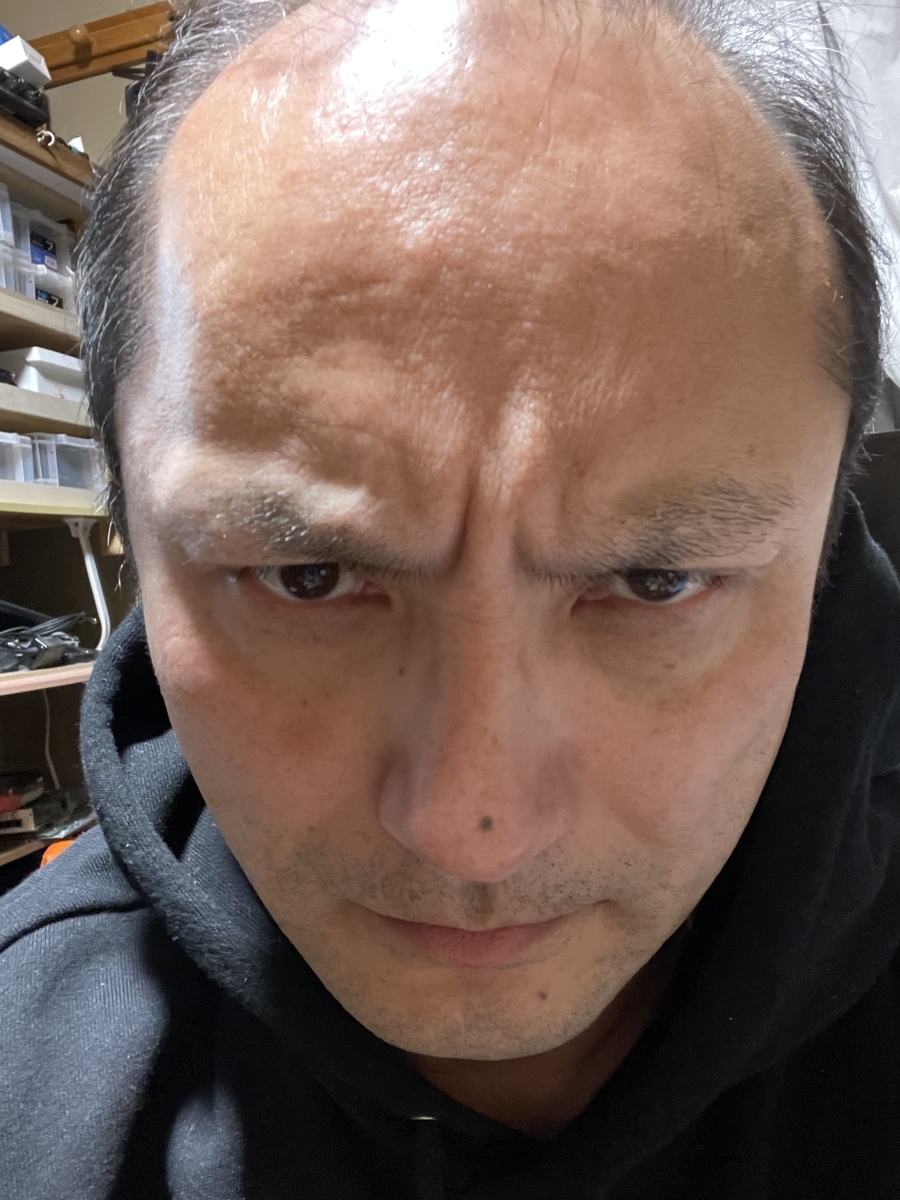
Because of my spiky, blond Japanese heavy-metal hairstyle, my scalp ended up looking like Jason Statham’s.
Recently, I’ve been using a multitrack recorder to mix Yoshiyuki Osawa’s “Soshite Boku wa Tohō ni Kureru” into a dance beat just for fun.
And finally, I’ve started our in-house development.
At first, I was thinking of building IPS and WAF from scratch on bare-metal, but I’m going to take an easier route.
A Windows application is more advantageous for building something B-to-C.
The real reason I left the company was that if all the senior colleagues I admired were going to retire, I felt there was no longer any reason for me to stay.
“I’m afraid of Japanese,” written by Bowie.
